







Leadership
Netflix co-founder Reed Hastings to step down from board in June






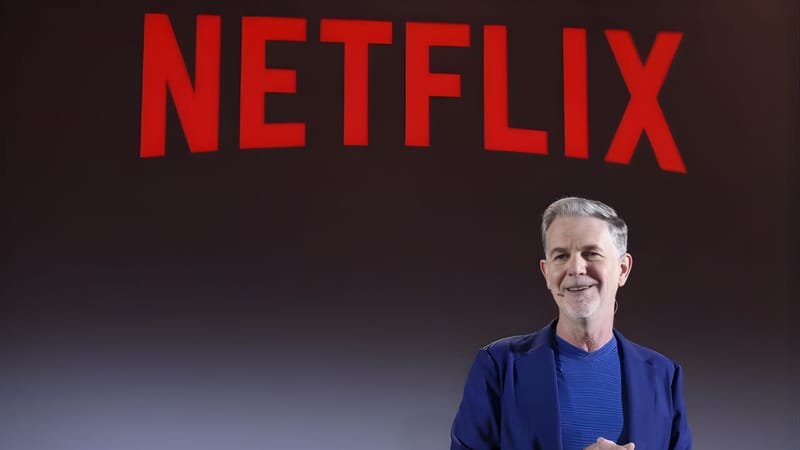
Founder’s exit marks a rare full transition as Netflix reshapes leadership and governance after succession
Netflix co-founder Reed Hastings will step down from the company’s board of directors in June, drawing a line under nearly three decades of involvement in the business he built into a global streaming powerhouse.
The decision, announced alongside the company’s first-quarter earnings, means Hastings will not seek re-election when his term expires.
The move comes less than three years after Hastings stepped down as co-chief executive and transitioned to executive chairman, handing operational control to Ted Sarandos and Greg Peters.
A rare founder exit from governance
Hastings’ departure is notable not just for its timing, but for its completeness. Founders often retain board influence long after stepping away from executive roles, making a full exit from governance relatively uncommon.
Sarandos acknowledged this dynamic, telling investors that it is “very unusual for a founder to step away from the board of the company after succession,” while adding that Hastings is “no ordinary founder,” CNN reported.
Netflix said its board and nominating and governance committee will now begin the process of reshaping the board in the coming months.
Focus shifts beyond Netflix
In a statement, Hastings reflected on his tenure, highlighting a focus on “member joy” and building a culture that could be sustained beyond his leadership.
The company said he will now turn his attention to philanthropy and other pursuits.
Outside Netflix, Hastings and his wife Patty Quillin have been active in education-focused philanthropy, including establishing a $100 million fund in 2016, according to CNN. He has also made significant donations to universities and remains engaged in broader civic initiatives.
Leadership transition already underway
Hastings stepped down as co-CEO in 2023, concluding a leadership run that began with Netflix’s founding in 1997. Under his stewardship, the company moved from a DVD-by-mail service to a global streaming platform that reshaped how content is consumed.
By the time of his transition, Netflix had more than 230 million paying subscribers worldwide, CNN reported.
Since then, Sarandos and Peters have overseen the company’s next phase, which has included a crackdown on password sharing, expansion into live content formats, and a deeper push into advertising-supported subscriptions.
As of January 2026, Netflix had grown to 325 million paid subscribers, reflecting continued momentum under the new leadership structure.
Board exit unrelated to recent strategic moves
Hastings’ decision to step down follows speculation around Netflix’s recent strategic choices, including its withdrawal from a bidding process involving Warner Bros. Discovery.
However, Sarandos dismissed any connection between the two, stating that Hastings had supported the potential deal and that the board had unanimously backed it.
He added that the decision to step down was independent of recent corporate developments.
End of a defining chapter
Hastings’ exit marks the final stage of a carefully managed succession process at Netflix. From founding the company in 1997 to steering its transformation into a global media leader, his influence has been central to its evolution.
The company’s next phase will be shaped without his direct oversight, as governance and strategy increasingly rest with a new generation of leadership.
For Netflix, the transition is both symbolic and structural. The founder era has formally closed, and the company now moves fully into its post-Hastings chapter.
Topics
Author
Loading...
Loading...